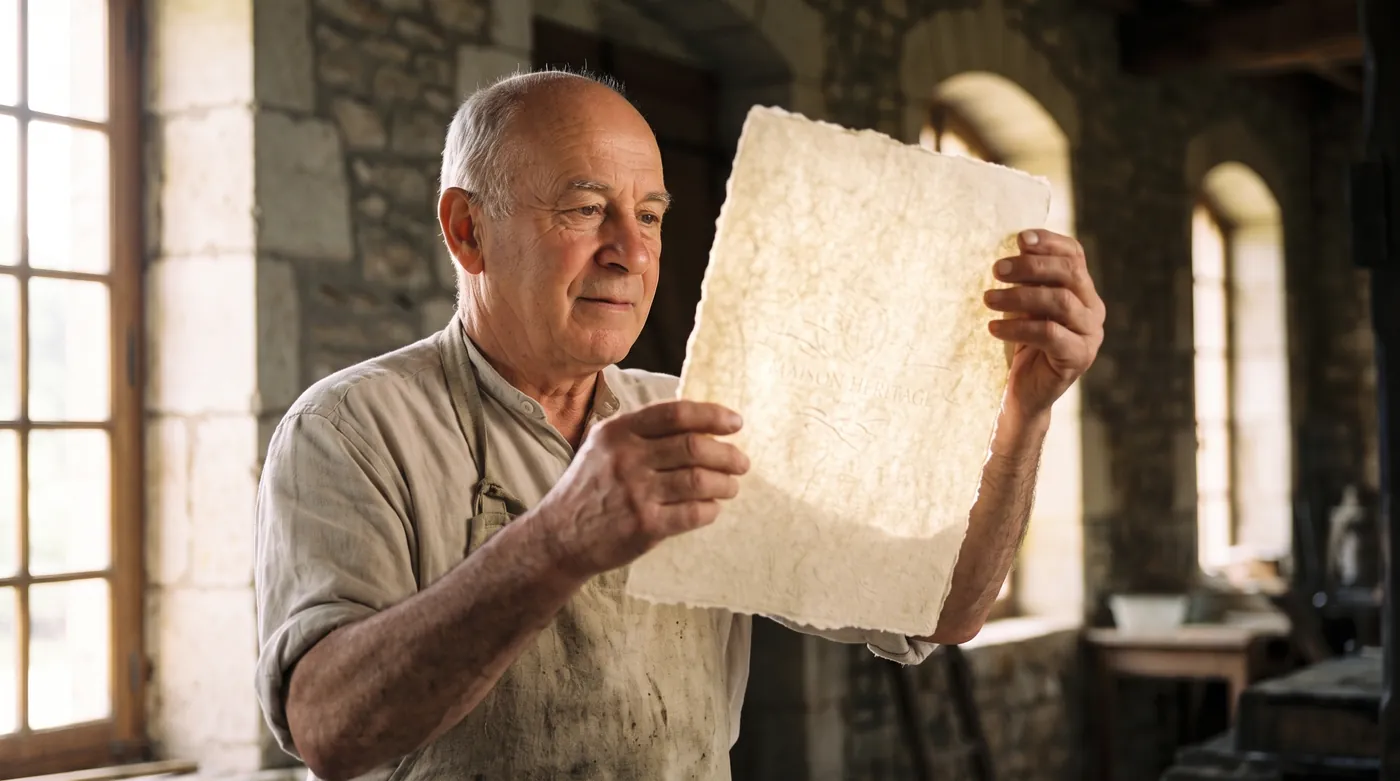
A sheet of Paris
Belle Époque Atelier began with a simple conviction: that the materials an artist touches every day should be as beautiful as the work they make.
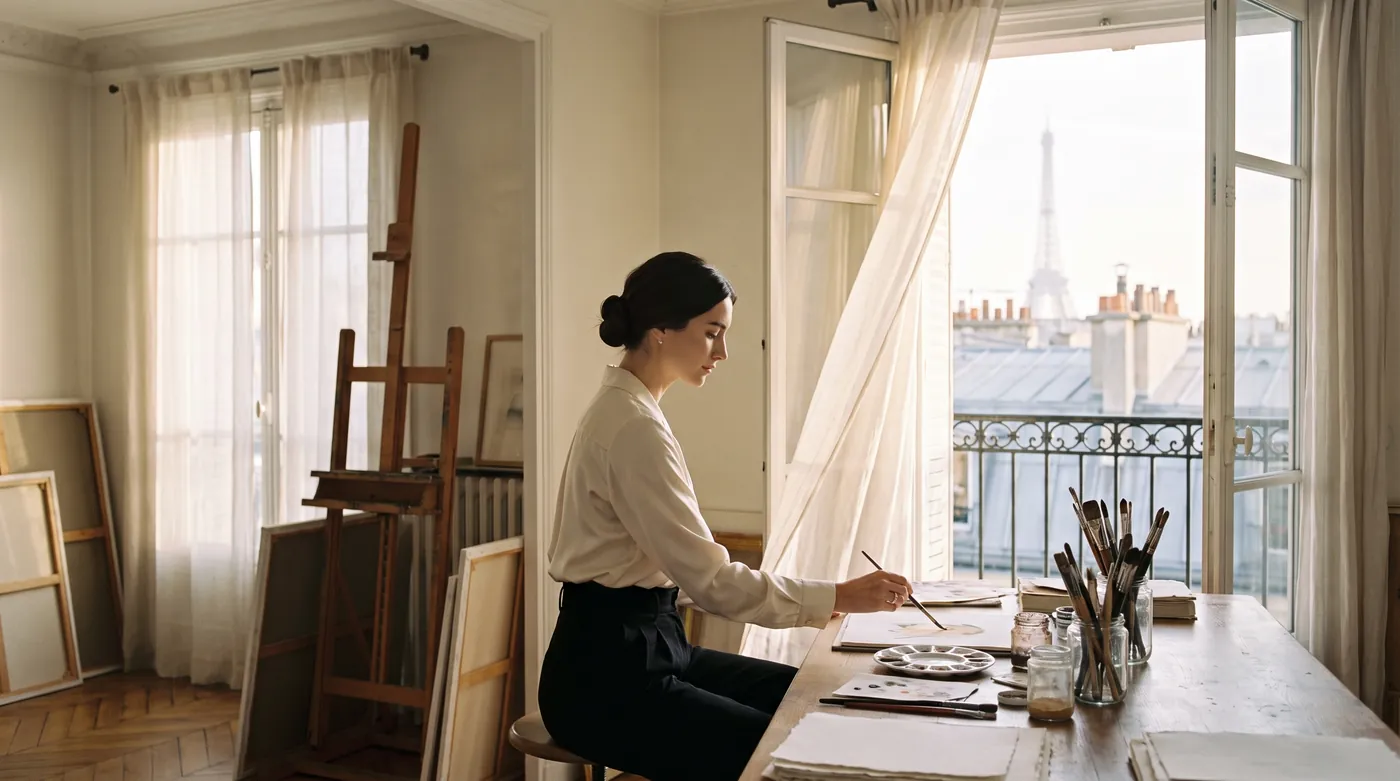
The most beautiful era
From 1871 to 1914, Paris lived a moment unlike any before. The Eiffel Tower rose against the sky in 1889. The boulevards were rebuilt wide and golden. Toulouse-Lautrec sketched in Montmartre; Monet stood in the rain at Argenteuil. The Impressionists were no longer scandals, but heroes.
It was an era when beauty was woven into every detail of daily life — the carved zinc bar of a café, the printed handbill of a cabaret. Things were made, and the making was visible. We named the maison after it, and we hold ourselves to it.
Cotton, water, and a master’s hands.
The finest artist papers are still formed the way they were in the age of the Impressionists: fibre by fibre, sheet by sheet.
How fine paper is made
Every quality our painters prize — the way a wash settles, the way a colour lifts, the way a sheet lies flat when it dries — is decided long before it reaches the studio.
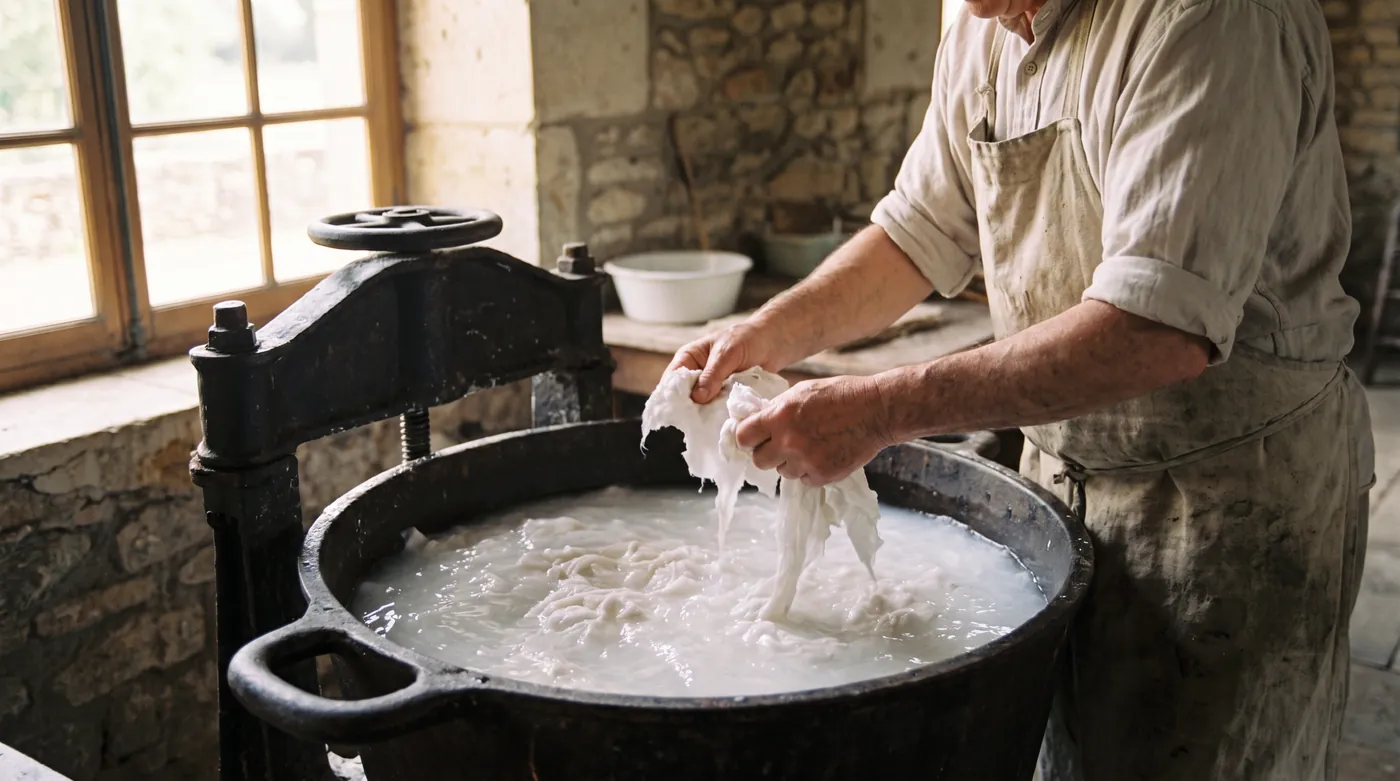
The Cotton
Clean cotton is torn by hand and beaten in water until every fibre is free.
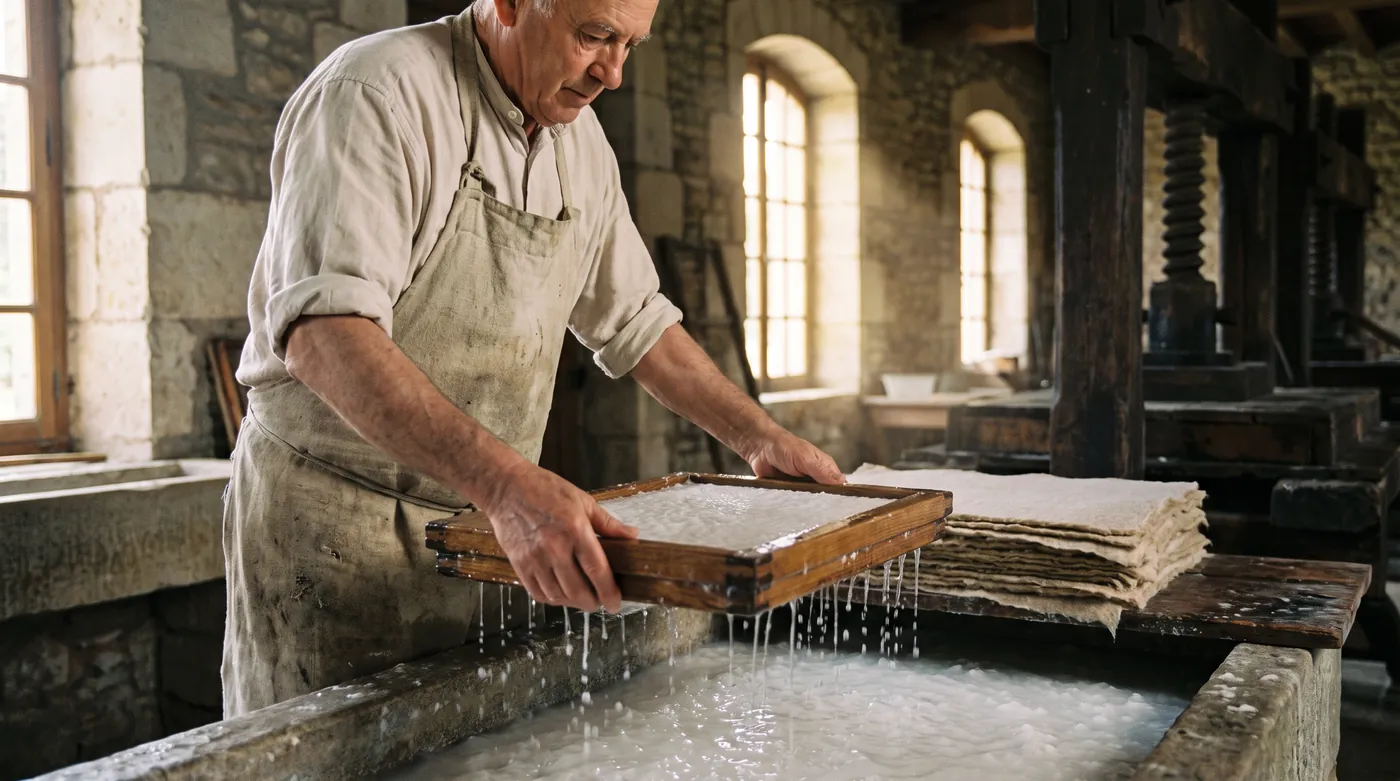
The Vat
The mould and deckle are dipped, lifted level, and shaken so the fibres knit.
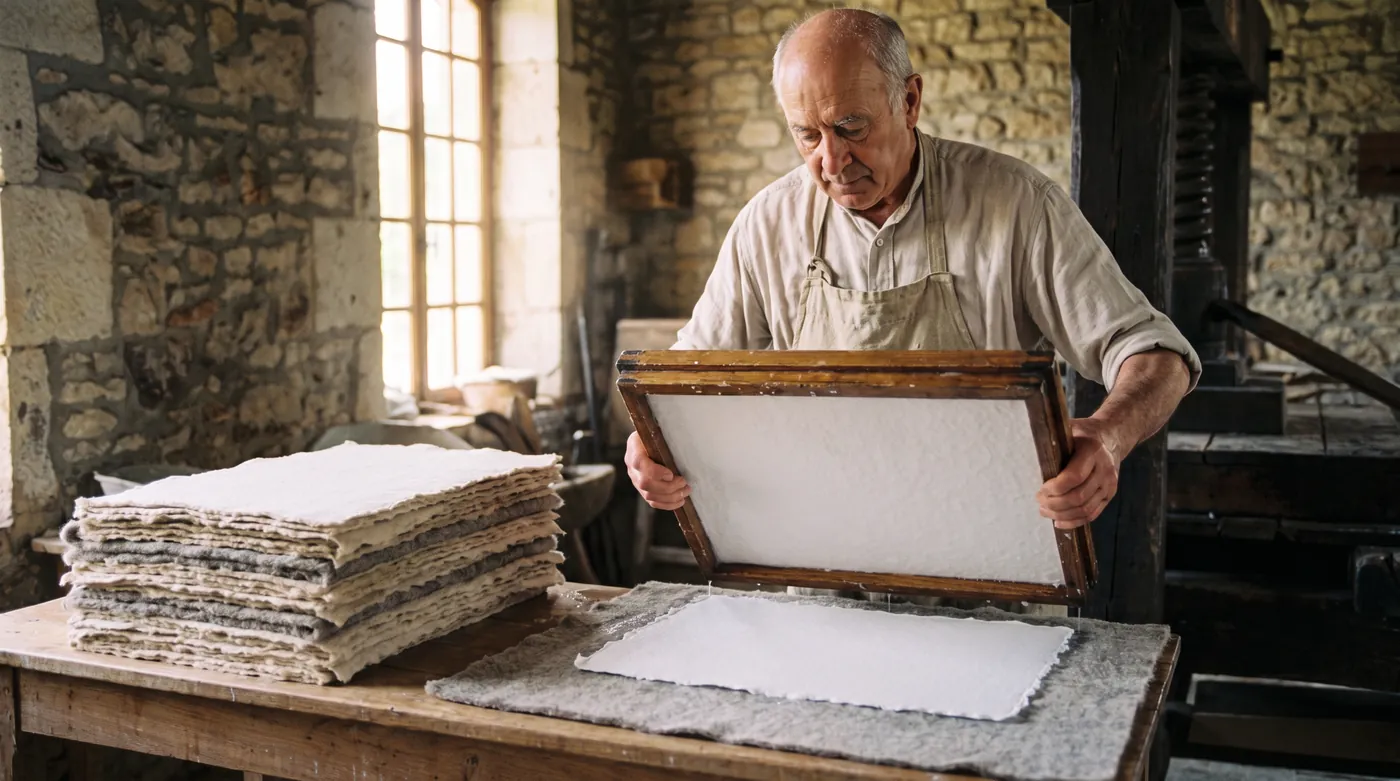
The Couch
Each wet sheet is rocked onto wool felt — one sheet, one movement.
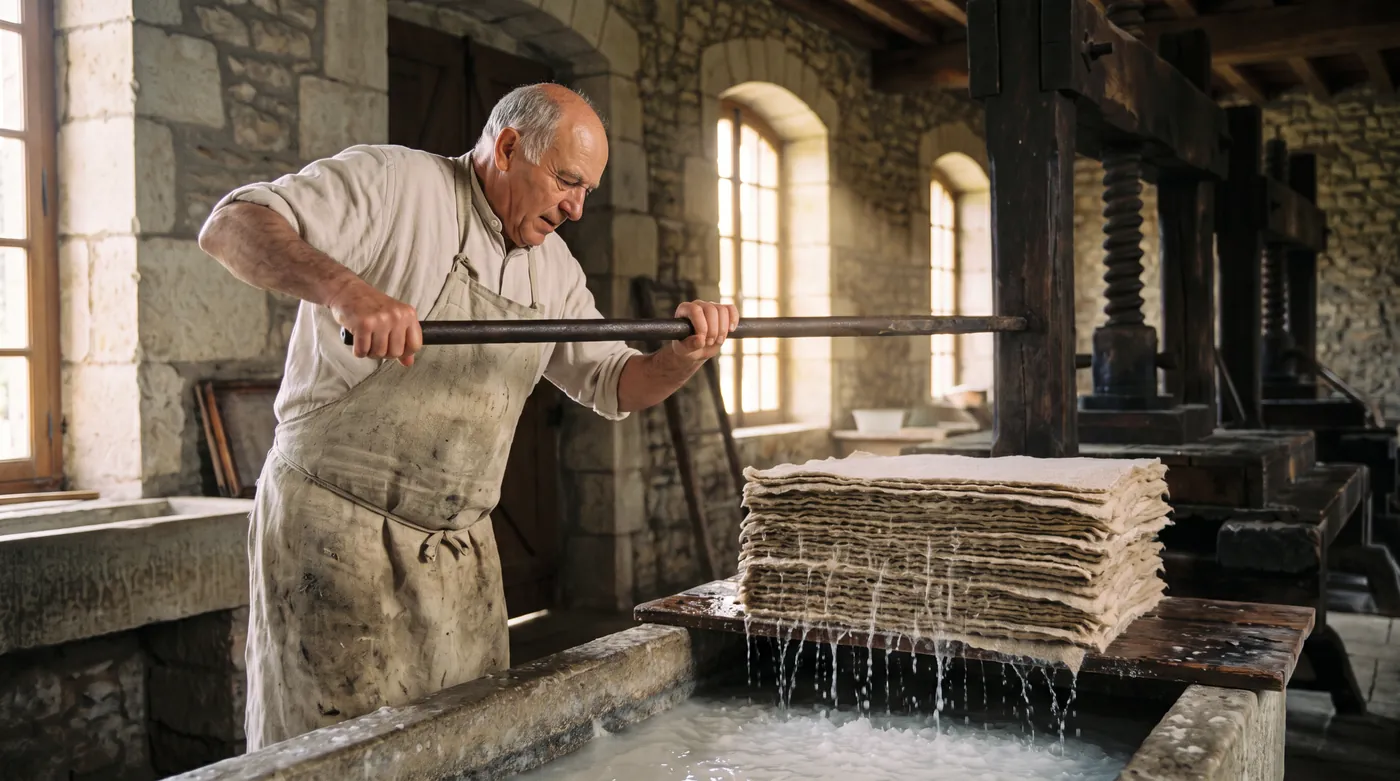
The Press
Hundreds of sheets are pressed together, and the water runs out of them.
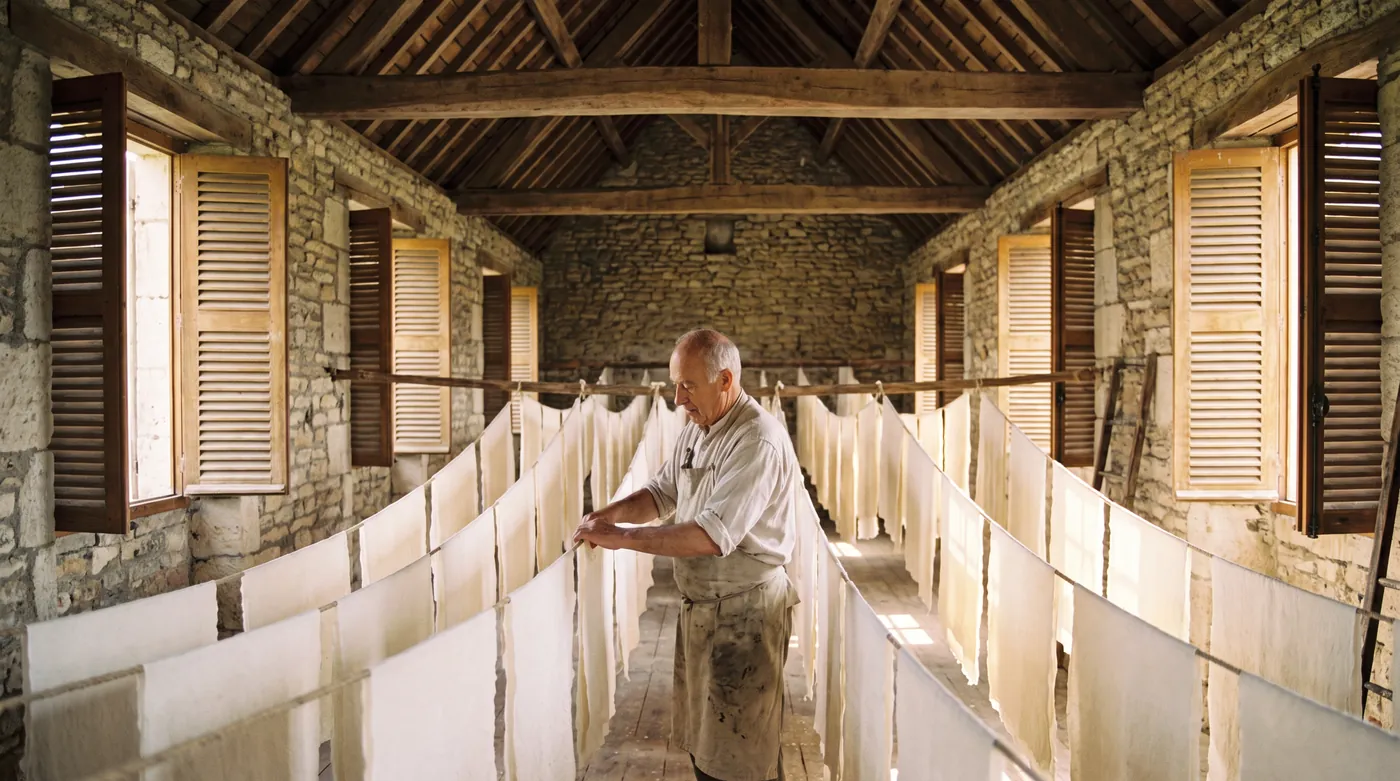
The Loft
The sheets dry slowly in the air of the loft, and keep their character.
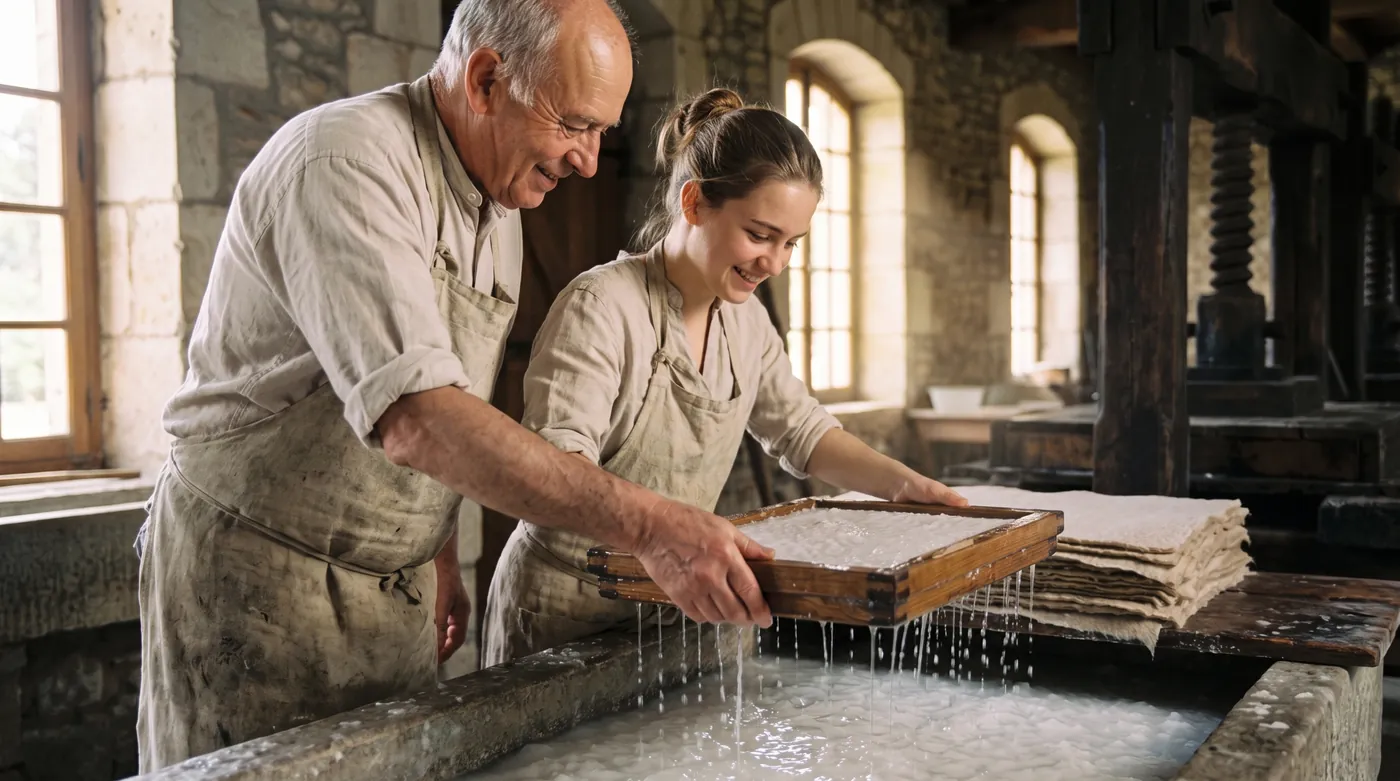
Knowledge passed from hand to hand
Papermaking is not learned from books. It is learned at the vat, beside someone who has done it ten thousand times — the angle of the mould, the rhythm of the shake, the moment the fibres settle.
It is that inheritance we look for in every paper we choose: cotton-rich, neutral pH, a tooth with character, and a weight that will not give way beneath a generous wash.
“The sheet is not a stage. It is a partner.”The Atelier’s first principle
Materials first
Cotton-rich papers at neutral pH; pigments chosen for clarity and light-fastness; cases of linen, walnut, leather and velvet.
Numbered and sealed
Every piece leaves the maison with a holographic seal and a unique serial, so you always know that what you hold is exactly what we made.
Made to be used
Beauty is the point — but never at the expense of performance. Every product is tested by working artists before it carries our name.
A letter, not a newsletter
We write only when we have something worth saying: a new collection, a limited edition, a story from the Journal.